Chess and Brain Development
Does playing chess improve memory and concentration?
· 7 min read
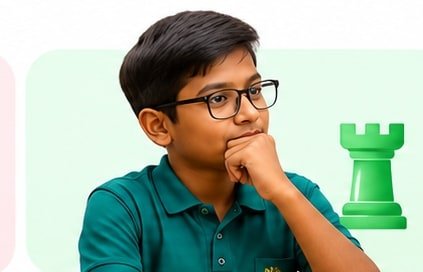
Memory and concentration top many parent wish-lists. Chess looks like a perfect match because players must remember plans, notice threats and stay with a position. The accurate story is more nuanced than a simple yes.
This article separates what happens during chess from what we can responsibly claim about lasting improvement in school or daily life.
Concentration on the board
A chess game asks for sustained attention: scanning the board, updating threats and resisting distraction. For many children, that demand is more engaging than abstract worksheets because the feedback is immediate.
Coaches can build concentration gradually — puzzles with a time boundary, then longer practice games as stamina grows.
Which kinds of memory chess uses
Working memory holds the current plan. Pattern memory grows as children recognise forks, pins and basic endgames. Long-term memory stores rules and opening ideas. None of these mean a child will suddenly memorise every school textbook.
Useful home practice includes talking through one tactic after a game rather than drilling endless lines.
What evidence allows us to say
Meta-analytic work on chess instruction and cognitive or academic transfer reports moderate average effects in the included literature, alongside warnings about weak control conditions in many studies. Evidence is therefore promising in places and limited in others.
A responsible summary for parents: chess gives frequent practice with attention and memory demands. Whether those gains transfer widely depends on teaching quality, duration, the child and other school supports.
Practical ways to train focus through chess
Remove phone distractions during lessons. Use a quiet corner. Alternate puzzles and play. Celebrate moments when a child catches their own mistake. Explore beginner programmes if foundations are still forming.
Concentration myths versus classroom reality
A child who focuses on chess for thirty minutes will not automatically focus on every subject. Attention is partly context-specific. Still, practising the feeling of deep focus can help children recognise what concentration feels like — a useful metacognitive skill.
Teachers sometimes notice improved homework persistence when children enjoy structured hobbies. That observation is encouraging, yet it is not a controlled clinical finding. Keep school supports in place.
If concentration collapses only at home but not in coached lessons, the issue may be environment: noise, devices or unclear expectations. Fix the environment before blaming the child.
Memory techniques that stay ethical and light
Pattern recognition grows when children see the same motif in different settings: a fork in a puzzle, then in a practice game. Coaches should spiral themes rather than dump fifty openings onto a beginner.
Spaced review helps. Revisiting a tactic after three days often beats cramming twenty puzzles in one evening. Parents can keep a small notebook of three motifs to revisit each week.
Avoid commercial claims that chess will raise memory scores by a fixed percentage. No responsible academy should invent such statistics.
Building a concentration-friendly lesson plan
Warm up with two easy puzzles to create early success. Introduce one new idea. Play a short game with a thinking goal, such as naming a threat before each move. Close with a calm recap.
For online lessons, place the device on a table, not a bed, and keep a physical board nearby so the child can move pieces by hand. Hands-on interaction often improves attention for younger learners.
Track focus with simple notes: started on time, needed two breaks, completed the plan. Share patterns with the coach so adjustments stay data-informed rather than emotional.
A four-week focus experiment parents can run
Families exploring memory and concentration through chess often want concrete next steps rather than slogans. Begin with one coached session and one short home ritual, then review after four weeks what changed in mood, patience and understanding of rules.
Keep notes in plain language: what went well, what confused the child, what the coach suggested. Notes make progress visible and reduce anxiety-driven comparisons with other children.
Remember that healthy chess learning respects sleep, schoolwork and play. If any of those pillars wobble, temporarily simplify chess goals instead of adding pressure. Sustainable habits outperform dramatic bursts.
When you are ready to deepen training, compare day, online and residential options carefully and confirm details directly with Kranthi Chess Academy rather than relying on assumptions about schedules or facilities.
Finally, protect joy. A child who looks forward to the next lesson will practise thinking skills far more often than a child who associates chess with adult stress. Joy is not the opposite of discipline — it is the fuel that makes discipline possible.
Separating chess focus from phone distraction
Families exploring attention habits often want concrete next steps rather than slogans. Begin with one coached session and one short home ritual, then review after four weeks what changed in mood, patience and understanding of rules.
Keep notes in plain language: what went well, what confused the child, what the coach suggested. Notes make progress visible and reduce anxiety-driven comparisons with other children.
Remember that healthy chess learning respects sleep, schoolwork and play. If any of those pillars wobble, temporarily simplify chess goals instead of adding pressure. Sustainable habits outperform dramatic bursts.
When you are ready to deepen training, compare day, online and residential options carefully and confirm details directly with Kranthi Chess Academy rather than relying on assumptions about schedules or facilities.
Finally, protect joy. A child who looks forward to the next lesson will practise thinking skills far more often than a child who associates chess with adult stress. Joy is not the opposite of discipline — it is the fuel that makes discipline possible.
Light review cycles that stick
Families exploring working memory often want concrete next steps rather than slogans. Begin with one coached session and one short home ritual, then review after four weeks what changed in mood, patience and understanding of rules.
Keep notes in plain language: what went well, what confused the child, what the coach suggested. Notes make progress visible and reduce anxiety-driven comparisons with other children.
Remember that healthy chess learning respects sleep, schoolwork and play. If any of those pillars wobble, temporarily simplify chess goals instead of adding pressure. Sustainable habits outperform dramatic bursts.
When you are ready to deepen training, compare day, online and residential options carefully and confirm details directly with Kranthi Chess Academy rather than relying on assumptions about schedules or facilities.
Finally, protect joy. A child who looks forward to the next lesson will practise thinking skills far more often than a child who associates chess with adult stress. Joy is not the opposite of discipline — it is the fuel that makes discipline possible.
Chess can strengthen the habits of concentrating and remembering what matters in a position. Keep expectations honest, coaching patient and practice regular.
Ready to try structured lessons? Contact Kranthi Chess Academy.
Memory and concentration improve most when practice is regular, feedback is kind and expectations stay honest about what chess can and cannot do alone.
Frequently asked questions
Will chess fix attention difficulties?
Chess may help some children practise focus, but it is not a clinical treatment. Speak with appropriate professionals if you have concerns about attention disorders.
Do we need to memorise openings early?
Usually no. Early learners benefit more from rules, tactics and careful play than from heavy opening memorisation.
How long should a concentration-focused session last?
Often 30–45 minutes for younger children, adjusted to energy and school day demands.
Research sources
- Sala & Gobet (2016), Educational Research Review — chess transfer meta-analysis — Reports moderate average effects in school chess studies, with important design limitations (few active-control trials).
- American Psychological Association — executive function resources — Explains planning, working memory and flexible thinking as learnable skills shaped by practice and environment.
Discover Our Chess Training Programmes
Talk with Kranthi Chess Academy about a format that fits your child — without invented fees or facility promises.
Discover Our Chess Training ProgrammesRelated articles
How Chess Helps Develop a Child's Brain: A Parent's Guide
Chess invites children to practise attention, planning and flexible thinking. Use research carefully — benefits come from guided practice, not magic claims.
6 min read
Can Chess Help Children Develop Better Focus and Discipline?
Focus and discipline improve when children practise structured effort. Chess offers clear rules, goals and feedback that support those habits.
6 min read
Chess and Critical Thinking: How Children Learn to Think Ahead
Critical thinking in chess means questioning first ideas, checking evidence on the board and choosing with a reason — skills children can practise game after game.
6 min read
How Regular Chess Practice Can Support a Child's Learning Journey
Steady practice beats occasional intensity. Regular chess builds familiarity, confidence and thinking stamina over months.
6 min read